
Intercept • Collect • Protect
Save Ocean
Most marine pollution starts on land and travels down rivers and drains to the sea. Our Save Ocean vertical intercepts floating waste at the last practical point before it reaches the ocean.
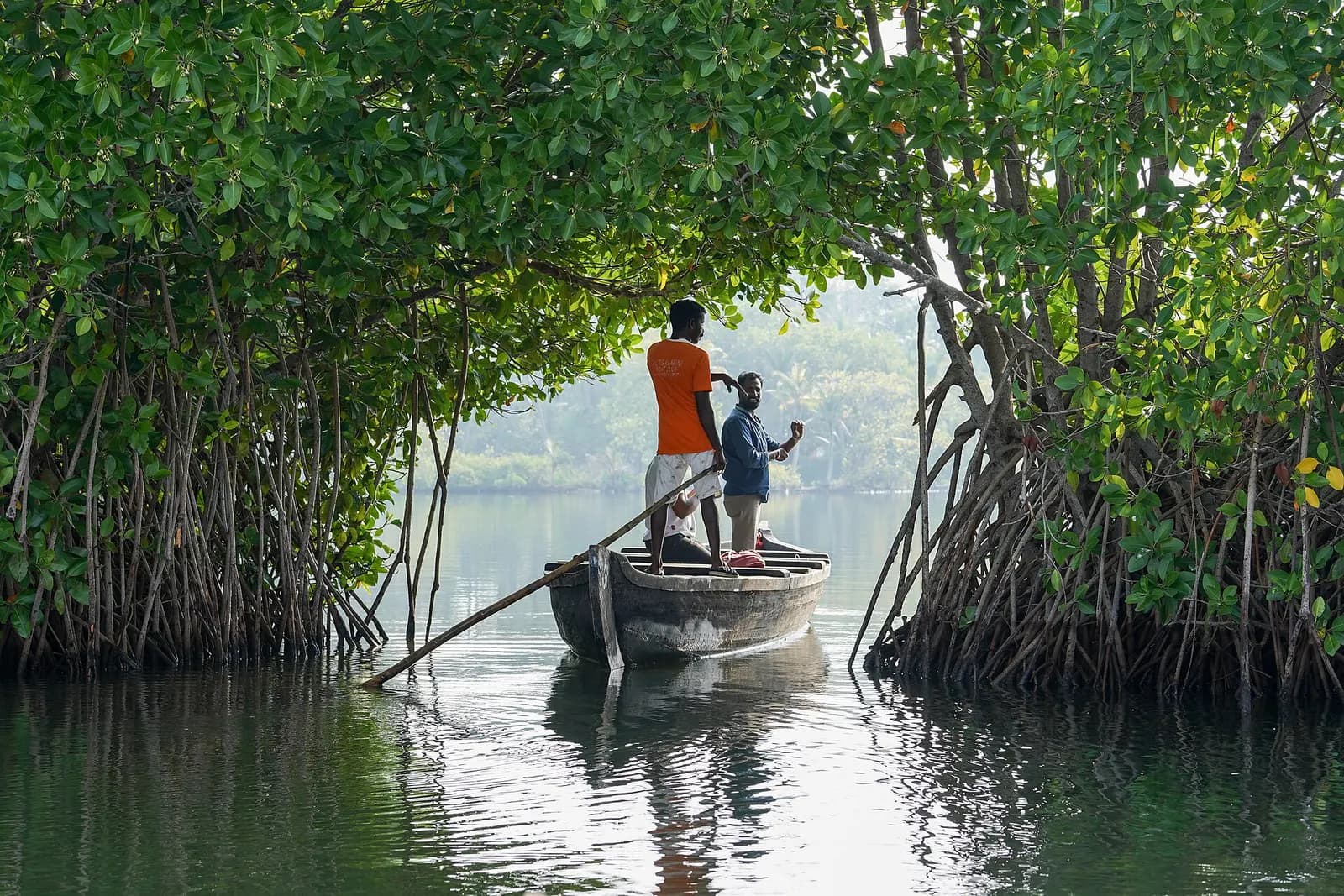
Stop pollution at the source
Oceans receive large quantities of plastic and solid waste carried through rivers, streams, stormwater drains and urban waterways. A significant share of marine pollution originates on land.
Waste that enters a river travels downstream, reaches estuaries and river mouths, and ends up in the ocean. Cleaning the ocean after waste has dispersed is far harder than stopping it from getting there.
Flagship concept: river mouth trash interception
We aim to develop floating trash barriers at river mouths, estuaries, creek outlets and other suitable points where river water meets the sea. The barriers intercept floating plastic, bottles, packaging, thermocol and other debris carried by the current.
The barrier configuration guides floating waste to a designated collection point for removal and responsible processing, rather than letting it disperse into coastal waters.
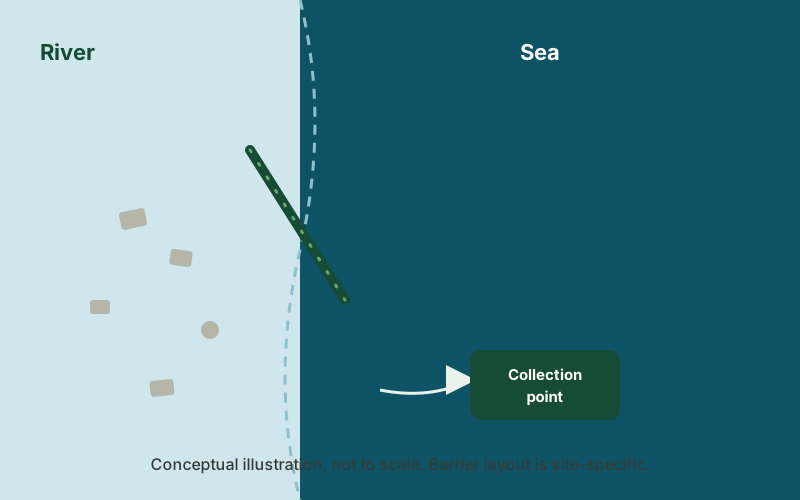
How the system works
Step 1: Waste moves through rivers
Floating waste travels downstream through rivers, creeks and drainage channels.
Step 2: Strategic interception
Floating barriers are installed at suitable river stretches, estuary approaches or river mouths.
Step 3: Guided collection
The barrier directs waste to a collection zone without unnecessarily obstructing the waterway.
Step 4: Extraction and segregation
Collected material is removed manually or mechanically, weighed, and segregated into recyclable, recoverable and reject fractions.
Step 5: Responsible processing
Recyclables go to authorised recyclers. Residual waste goes for appropriate treatment and disposal.
Step 6: Monitoring and reporting
Collection quantities, waste composition, maintenance activities and estimated marine litter interception are recorded.
Solutions and services
River-mouth trash interception barriers
Floating trash barriers across rivers and creeks
Floating waste collection and extraction systems
Stormwater drain and nallah waste interception
Estuary and coastal litter management
Riverbank and shoreline cleaning
Plastic waste segregation and recovery
Community-led coastal clean-up programmes
Waste interception monitoring and impact reporting
Awareness programmes on marine pollution and responsible disposal
Engineering considerations
Every installation is site-specific. Possible configurations include floating boom systems, floating mesh barriers, diagonal interception barriers, modular collection systems and conveyor-assisted extraction.
River width, depth, water velocity and seasonal level changes
Monsoon discharge and flood conditions
Tidal movement and backflow at river mouths
Boat navigation, fishing, aquatic life and ecological sensitivity
Anchoring, structural loads, safe extraction and shore access
Maintenance and responsible waste handling
Designed to work with the river
The design must allow adequate water flow and must not create an unsafe obstruction to navigation or aquatic movement. It must account for high-flow monsoon conditions and needs the appropriate environmental and statutory approvals.
We envision a network of waste interception points along vulnerable rivers, creeks and estuaries, supported by local waste-management infrastructure and community involvement. Save Ocean is not just about cleaning beaches. It is about stopping pollution before it reaches the beach.
Sub-initiatives
River to Ocean
Riverine waste interception.
Clean Coast
Coastal and shoreline clean-up.
Plastic Recovery
Segregation and recycling.
Ocean Guardians
Community and educational participation.
Blue Impact
Monitoring and reporting on marine pollution prevention.
Have a river or coastline in mind?
Tell us about the waterway, the problem you have seen and who manages the site.